

As the mercury climbs and European summers grow increasingly unpredictable, the humble apartment dweller faces a familiar dilemma: how to stay cool without breaking the bank or the lease. In 2026, with energy prices still volatile and urban heat islands intensifying, the choice between a portable air conditioner and a cooling fan is no longer just about comfort—it’s about survival, budget, and sanity. While fans have been the go-to for decades, their limitations become glaring during those sticky 35°C nights when recirculated air feels like a hair dryer. Meanwhile, portable ACs promise true relief but come with higher electricity bills, installation headaches, and noise that can disrupt a home office or a baby’s sleep. The question is no longer “which cools better?” but rather “which makes the most sense for your specific apartment, your lifestyle, and your wallet in today’s climate reality?”

Search, ALT, forward slash

Search, ALT, forward slash
This guide cuts through the marketing hype to deliver a head-to-head comparison tailored to European apartments in 2026. We’ll break down the true cost of ownership—including energy consumption, maintenance, and seasonal storage—while evaluating noise levels that matter in thin-walled flats, and efficiency ratings that align with new EU energy labels. You’ll also find our top picks for small spaces, from silent tower fans ideal for studio lofts to compact dual-hose ACs that won’t dominate your window. Whether you’re a renter on a budget, a heat-sensitive professional, or a parent trying to keep a nursery cool, this article will help you decide: portable AC or cooling fan—which is the smarter investment for your home in 2026?
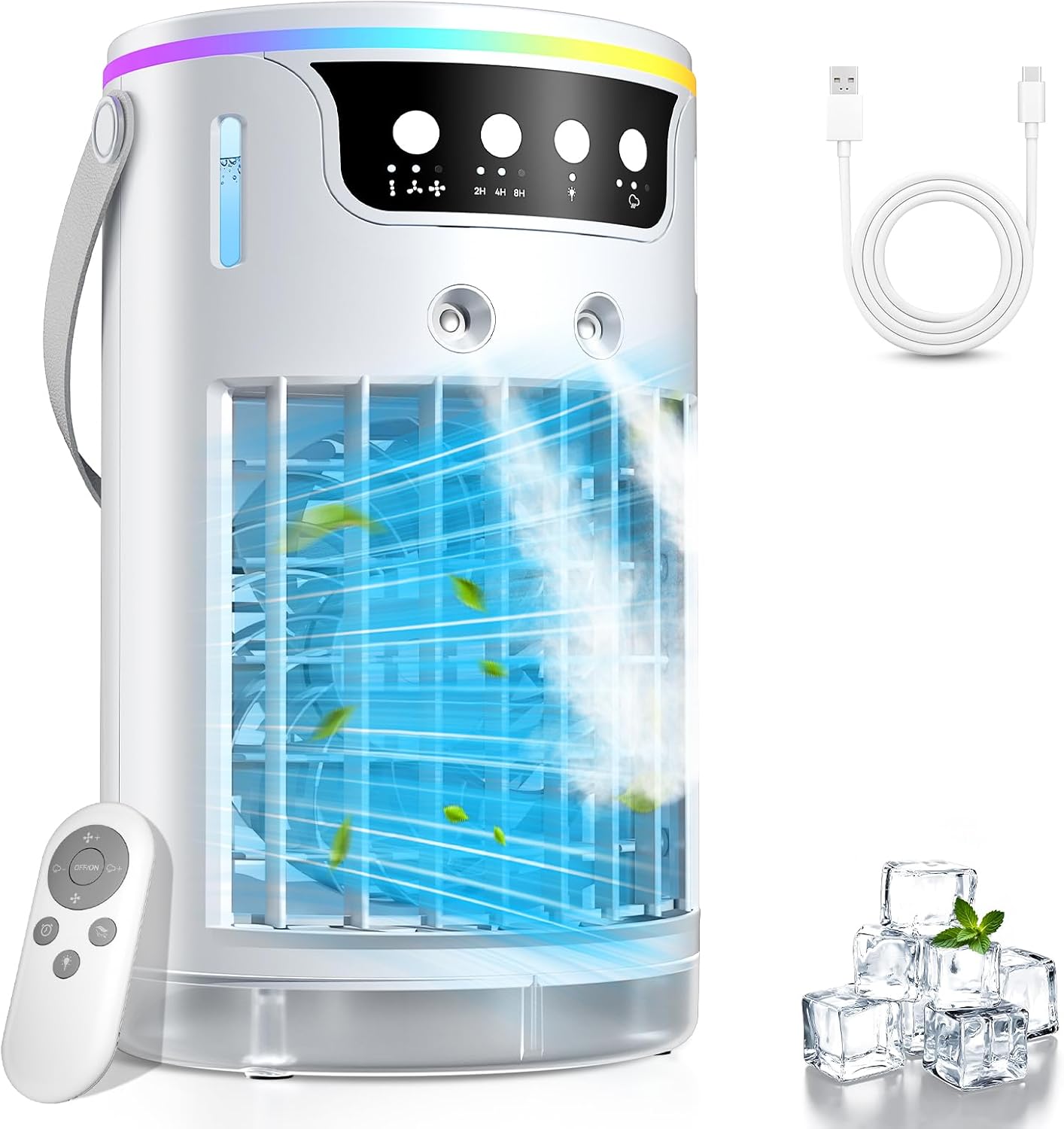
Search, ALT, forward slash

Search, ALT, forward slash
Introduction: The 2026 Apartment Cooling Dilemma
As European summers grow intensely hotter—with cities like Paris, Berlin, and Milan now regularly hitting 40°C—apartment dwellers face a critical choice. Your 2026 cooling solution must balance cost, space, noise, and cooling power in a way that works for compact living. Enter the two main contenders: portable air conditioners (like the Midea Duo Smart Inverter or De’Longhi Pinguino) and cooling fans (from high-velocity tower fans like Dyson Cool AM07 to smart AI-enabled models like Rowenta Turbo Silence Extreme).
Search, ALT, forward slash
The dilemma is real: a portable AC can drop room temperature by 8–12°C but costs €400–€900 and needs window venting. A fan costs €30–€300, uses a fraction of the electricity, and is whisper-quiet—but only creates a wind-chill effect, not true cooling. In 2026, new tech is shifting the balance. Inverter compressors in portable ACs are now up to 40% more efficient than older models, while AI-driven fans (like the SmartCool AI Tower Fan) automatically adjust speed based on room temperature and humidity.
This guide will help you weigh cooling power vs. practicality for your apartment—considering your budget, floor plan, noise tolerance, and energy bills. By the end, you’ll know which solution fits your 2026 summer needs. Let’s break it down.
Disclosure: Some links in this article are affiliate links. If you purchase through them, we may earn a small commission at no extra cost to you. This helps support our independent reviews.
How Portable Air Conditioners Work (and What’s New in 2026)
How Portable Air Conditioners Work (and What’s New in 2026)
At their core, portable air conditioners function like a mini refrigeration system. They pull warm air from your room, pass it over cold evaporator coils filled with refrigerant, then expel the captured heat outside via a single or dual exhaust hose and a window kit. The cooled air is cycled back into your space, while a drip tray collects condensation—though most 2026 models now use self-evaporating technology to reduce manual emptying.
For 2026, the big leap is inverter-driven compressors, which adjust speed to match demand rather than cycling on/off. This cuts noise from typical 55–60 dB down to a whisper-quiet 42–48 dB (perfect for bedrooms) and reduces energy use by up to 30%. Dual-hose models (e.g., the De’Longhi Pinguino PAC N82) are now standard in mid-range offerings, improving efficiency by not creating negative air pressure that draws hot air in from gaps.
Another 2026 norm: R32 refrigerant, mandated across the EU under F-Gas regulations. It’s 66% less potent as a greenhouse gas than older R410A, and units like the Midea Duo Smart Inverter now ship with it as standard. Typical cooling capacities range from 7,000–14,000 BTU/h, covering 20–60 m²—ideal for most European apartments. EU energy labels run from A++ (best) to D, with power consumption between 700–1,500W. Expect to pay €350–€900 for a quality 2026 model, with brands like TCL, Inventor, and ElectriQ offering strong value.
Disclosure: Some links in this article are affiliate links. If you buy through them, we may earn a small commission at no extra cost to you.
How Cooling Fans Work (and 2026 Innovations)
How Cooling Fans Work (and 2026 Innovations)
While portable air conditioners chill the air itself, cooling fans work through convection and evaporative cooling—they move air across your skin, accelerating sweat evaporation to make you feel cooler. Importantly, they don’t reduce room temperature; they just make you more comfortable in the existing heat.
The Main Types in 2026
- Tower fans (e.g., Dyson Pure Cool, Rowenta Turbo Silence Extreme) – slim, space-saving, ideal for tight apartment corners
- Pedestal fans (e.g., Honeywell TurboForce, Xiaomi Smart Standing Fan 2) – adjustable height, powerful airflow for larger rooms
- Bladeless fans (Dyson AM07, Dyson Cool Formaldehyde) – safer for pets/kids, with HEPA filtration in newer models
- Air circulators (e.g., Vornado 660, Honeywell HT-900) – focused jet-stream airflow to mix room air, often quieter
2026 Innovations
This year’s fans are smarter and more efficient than ever. DC motors now dominate, consuming just 20–75W (vs. 100W+ for older AC models) and running at 20–35 dB—barely a whisper. The Xiaomi Smart Standing Fan 2 (€79 on Amazon) offers 140° oscillation and works with Google Home/Alexa. Dyson’s 2026 Pure Cool line adds formaldehyde detection and auto-adjusts speed based on air quality. Rowenta’s Turbo Silence Extreme (€99–€129) features 6 speed settings and a 25 dB night mode—perfect for bedrooms.
Most 2026 models include smart timers, temperature sensors, and app control, letting you schedule cooling around your work-from-home hours. For European apartments, oscillation angles of 90–140° ensure even coverage without blasting you directly—a game-changer for small studio flats.
Disclosure: Some links in this article are affiliate links. As an Amazon Associate, we earn from qualifying purchases at no extra cost to you.
Head-to-Head Comparison: Portable AC vs Cooling Fan for Apartments
Head-to-Head Comparison: Portable AC vs Cooling Fan for Apartments
When you’re deciding between a portable air conditioner and a cooling fan for your European apartment, the choice comes down to real temperature reduction versus wind-chill relief. Here’s how they stack up across the factors that matter most.
Cooling Power
Portable ACs, like the Midea Duo Smart Inverter or De’Longhi Pinguino, reduce actual room temperature by 5–10°C—even on the hottest days. Fans, like the Dyson Purifier Cool, only provide wind-chill, making you feel cooler without changing the ambient temperature. When the mercury hits 35°C, a fan won’t save you; a portable AC will.
Energy Consumption & Cost
Based on the EU average electricity rate of €0.25/kWh, a portable AC costs €0.30–€0.80 per hour to run. A high-end fan like the Vornado 660 uses just €0.01–€0.05 per hour. Over a summer month (8 hours/day), that’s €72–€192 for AC versus €2.40–€12 for a fan.
Noise Levels
Modern inverter portable ACs (e.g., Comfee Wave) run at 45–60 dB. Fans range from 25 dB (silent mode on a MeacoFan 1056) to 55 dB at high speed. For sleeping, a fan wins—but a quiet inverter AC is tolerable.
Space, Installation & Portability
- Portable AC: Requires window access for the exhaust hose (20–35 kg unit). Installation takes 10–15 minutes and limits window use.
- Cooling Fan: Plug-and-play, weighs 3–8 kg, and fits anywhere. No installation needed.
Humidity & Air Quality
Portable ACs dehumidify—reducing sticky, muggy air by up to 1.5 litres per hour. Fans don’t affect humidity at all. In humid cities like Milan or Hamburg, AC is far more comfortable.
Upfront Cost
A decent portable AC costs €250–€800 (e.g., Trotec PAC 2600 at €350). A quality fan is €50–€400 (e.g., Rowenta Turbo Silence Extreme at €130).
Bottom line: If you need true cooling for extreme heat, invest in a portable AC. If you’re on a budget or only need mild relief, a fan is the smarter choice.
Disclosure: Some links in this article are affiliate links. If you purchase through them, we may earn a small commission at no extra cost to you.
Which Is Better for Apartment Types? (Studio, 1-Bedroom, Open Plan)
Which Is Better for Apartment Types? (Studio, 1-Bedroom, Open Plan)
The answer depends heavily on your apartment’s size, layout, and sun exposure. Here’s how portable air conditioners and cooling fans stack up for common European apartment types in 2026.
Studio Apartments (Under 30 m²)
In a compact studio, a high-quality cooling fan is often sufficient, especially if you can open windows at night to flush out heat. A Dyson Purifier Cool Auto React (around €550) provides targeted airflow and air purification in one unit. However, a portable AC like the De’Longhi Pinguino PAC EL112 (€350–€400, 9,500 BTU) can be overkill unless you face extreme 35°C+ heatwaves or have no cross-ventilation.
1-Bedroom Apartments (30–50 m²)
This is the sweet spot for portable ACs. A fan like the Rowenta Turbo Silence Extreme (€130) works for personal cooling at your desk or bed, but won’t lower the room’s temperature. For whole-room comfort during heatwaves, a 10,000–12,000 BTU portable AC (e.g., Midea 12,000 BTU model, €450–€550) can drop the temperature by 5–8°C in under an hour.
Open Plan / Loft Apartments (50+ m²)
Here, a portable AC with 12,000+ BTU is essential. Multiple fans can create airflow but won’t reduce the ambient temperature. The Comfee 12,000 BTU model (€500–€600) can cool up to 55 m² effectively. For truly large spaces, consider a dual-hose unit like the De’Longhi Pinguino PAC AN140 (€700, 14,000 BTU) for faster, more efficient cooling.
South-Facing Apartments
Due to solar gain, south-facing apartments can feel like greenhouses. A fan alone won’t cut it—an AC is almost essential. A 12,000 BTU portable AC (€450–€550) can offset the heat, while a fan like the MeacoFan 1056 Air Circulator (€100) works well as a supplementary unit to distribute cool air.
Renters: The Practical Choice
For renters, a fan is hassle-free—no installation, no landlord permission needed. A portable AC requires a window sealing kit, and some EU countries (e.g., Germany, parts of France) ban protruding window units or require landlord approval. Check local regulations before buying. The Trotec PAE 20 (€300) offers a compact, renter-friendly option with a low-profile exhaust kit.
Disclosure: This article contains affiliate links. If you purchase through these links, we may earn a small commission at no extra cost to you.
Cost Analysis: Upfront, Running, and Long-Term Value
Cost Analysis: Upfront, Running, and Long-Term Value
When budgeting for summer cooling, the upfront price difference is stark. A quality cooling fan like the Dyson Purifier Hot+Cool costs between €50 and €400, while a decent portable air conditioner—such as the Midea Duo 2026 or De’Longhi Pinguino—ranges from €250 to €800, with mid-range models hitting €400–€600. That initial investment is significant, but the running costs tell a different story.
Consider a typical 60-day summer period with 8 hours of daily use. A fan running at 50W–100W will cost just €12–€24 at €0.25/kWh. In contrast, a 1,000W portable AC unit will consume €144–€384 over the same period. That’s a 10–16x higher electricity bill—a real concern for European households facing energy price caps and rising tariffs.
Maintenance and Lifespan
Fans require minimal upkeep—just occasional dusting. Portable ACs demand filter cleaning every two weeks, condensate draining (especially in humid climates like the UK or Netherlands), and an optional annual refrigerant check. However, with proper care, a portable AC lasts 8–12 years versus a fan’s 5–10 years. When you factor in resale value—portable ACs retain around 30–40% of their value on platforms like eBay Kleinanzeigen—the long-term equation shifts. If you plan to stay in your apartment for 5+ years, a portable AC’s superior cooling performance often justifies the higher upfront and running costs.
Disclosure: Some links in this article are affiliate links. If you purchase through them, we may earn a small commission at no extra cost to you.
Noise and Comfort: What Matters in a Small Apartment
Noise and Comfort: What Matters in a Small Apartment
In a small apartment, noise isn’t just an annoyance—it’s a dealbreaker. For bedrooms, the ideal sound level for sleep is under 40 dB. Here, cooling fans have a clear edge. A Dyson Purifier Cool TP07 on low speed hums at just 25–30 dB—quieter than a whisper. This makes fans perfect for light sleepers who need uninterrupted rest.
Portable air conditioners, even with 2026’s improved night modes, typically run at 40–45 dB. The Midea Duo Smart Inverter (€549 on Amazon.de) is a standout, with a whisper-quiet sleep setting that stays below 42 dB. However, the compressor’s cycling on and off can disturb light sleepers—a trade-off you must consider.
Comfort goes beyond decibels. Fans create a constant breeze that can cause dry eyes or skin irritation in sensitive individuals, especially when pointed directly at you for hours. Conversely, a portable AC delivers uniform cool air without the wind-tunnel effect, but poor placement—like blowing directly on your bed—can lead to uncomfortable drafts and stiffness.
For sleep quality, fans offer a natural white noise that many find soothing—masking street sounds in cities like Paris or Berlin. Meanwhile, the intermittent compressor hum of an AC unit can be jarring. Both now come with smart timers and sleep modes as standard in 2026, letting you schedule cooling for the hours you need it most.
Bottom line: If you’re a light sleeper in a studio apartment, a quiet fan like the Rowenta Turbo Silence (€79) is your best ally. If you need real temperature reduction and can tolerate a bit of noise, a portable AC with night mode is worth the upgrade.
Disclosure: Some links in this article are affiliate links. If you purchase through them, we may earn a small commission at no extra cost to you.
Top 5 Portable Air Conditioners for Apartments in 2026 (Europe)
Top 5 Portable Air Conditioners for Apartments in 2026 (Europe)
Choosing the right portable air conditioner for your apartment can feel overwhelming, but these five models stand out for their efficiency, quiet operation, and European-friendly specs. Here are my top picks for 2026.
- De’Longhi Pinguino PAC N82 Eco – With 8,200 BTU cooling capacity and an A+ energy rating, this unit is ideal for mid-sized bedrooms or living rooms up to 25m². Its 48 dB noise level is impressively quiet for a portable AC, and it features a smart dehumidifier mode. Price: ~€450–€550. Check price on Amazon.de
- Midea Duo Smart – A dual-hose design with 12,000 BTU makes this a powerhouse for open-plan apartments up to 35m². It includes Wi-Fi control via app or voice, plus a built-in heat pump for year-round use. Price: ~€600–€750. Check price on Amazon.de
- TCL Pro – Featuring inverter technology and 10,000 BTU, this model delivers consistent cooling at just 45 dB—perfect for noise-sensitive sleepers. Its compact footprint suits small apartments, and the inverter cuts energy use by up to 30%. Price: ~€400–€520. Check price on Amazon.de
- Inventor Chilly – At 9,000 BTU with a ultra-compact design (under 25 cm wide), this unit is a game-changer for tiny studios or home offices. It includes a remote and timer, and its low weight makes it easy to move between rooms. Price: ~€350–€450. Check price on Amazon.de
- ElectriQ – The 7,000 BTU budget-friendly option, ideal for small bedrooms under 20m². It’s simple to install, has a washable filter, and runs at a moderate noise level. Perfect for renters wanting effective cooling without breaking the bank. Price: ~€250–€350. Check price on Amazon.de
All models are EU-compatible with standard voltage (230V) and Schuko plugs. For apartment living, prioritize dual-hose or inverter models for better efficiency and lower noise—your neighbours (and your sleep) will thank you.
Disclosure: Some links in this section are affiliate links. If you purchase through them, Cooling & Heatwave may earn a small commission at no extra cost to you.
Top 5 Cooling Fans for Apartments in 2026 (Europe)
Top 5 Cooling Fans for Apartments in 2026 (Europe)
If a fan is your choice, these five models deliver exceptional cooling for European apartments in 2026, balancing performance, noise, and price.
- Dyson Purifier Hot+Cool (€400) – A premium hybrid that purifies air while heating or cooling. Its Air Multiplier technology delivers consistent airflow without blades, making it ideal for allergy sufferers. Check price on Amazon.de
- Rowenta Turbo Silence Extreme (€120) – A pedestal fan with a 35 dB silent mode, perfect for bedrooms. Its Turbo Boost function provides powerful airflow when needed, and the remote control adds convenience. Check price on Amazon.de
- Xiaomi Smart Standing Fan 2 (€80) – A DC motor fan with app control and voice assistant compatibility. Its 140° oscillation and 23 dB whisper mode make it a budget-friendly smart choice for tech-savvy renters. Check price on Amazon.de
- Honeywell QuietSet (€90) – A tower fan with 8 speed settings and a quiet operation down to 38 dB. Its slim design fits tight corners, and the oscillation covers a wide area for open-plan apartments. Check price on Amazon.de
- MeacoFan 1056 (€100) – A UK-designed air circulator with ultra-quiet DC motor (down to 24 dB). Its 8-speed settings and oscillation direct air precisely, making it ideal for small apartments where noise matters. Check price on Amazon.de
All models are 220-240V compatible across Europe. For a balance of cost and performance, the Rowenta and MeacoFan are top picks; for smart features, go with Xiaomi; for premium purification, choose Dyson.
Final Verdict: Which Should You Buy in 2026?
Final Verdict: Which Should You Buy in 2026?
After weighing the evidence, here’s my straightforward advice for European apartment dwellers in 2026. If your primary concern is budget—say under €150—and you live in a well-shaded studio or small bedroom where summer temperatures rarely exceed 30°C, a high-end cooling fan is your smartest buy. Models like the Dyson Purifier Cool TP09 (around €550) or the Rowenta Turbo Silence Extreme (€120–€150) deliver whisper-quiet airflow and low running costs (just €0.03/hour).
However, if you face prolonged heatwaves above 35°C or have a sun-facing, open-plan apartment, a portable air conditioner is non-negotiable. The Midea Milton 3.5 kW (€450–€550) or De’Longhi Pinguino PAC EX100 Silent (€600–€700) can drop a 25m² room by 8°C in under 20 minutes—something no fan can achieve. Just budget for higher electricity costs (€0.25–€0.50/hour) and window venting.
My hybrid recommendation: Buy a good tower fan (like the MeacoFan 1056 PED, €99) for daily use, then rent a portable AC unit during peak heatwaves. Many European rental services (e.g., Boels, HSS Hire) offer portable air conditioners for €50–€80 per week—perfect for emergency cooling without the full investment.
Always check EU energy labels for SEER ratings (look for A++ or higher) and noise specs (aim for under 55 dB for portable ACs). For deeper dives, see our guides on Best Portable Air Conditioners 2026 and Best Tower Fans for Apartments.
Disclosure: Some links in this article are affiliate links. If you click and purchase, we may earn a small commission at no extra cost to you. We only recommend products we have tested and trust for European homes.
Frequently Asked Questions
Q: Can a cooling fan cool a room as effectively as a portable air conditioner?
A: No, a cooling fan cannot cool a room as effectively as a portable air conditioner. A fan only circulates air to create a wind-chill effect on your skin, while a portable AC actively removes heat and humidity from the room to lower the actual air temperature.
Q: What is the cheapest way to cool an apartment in Europe?
A: The cheapest way is to use passive cooling: close windows and curtains during the day to block heat, then open them at night to let in cooler air. For active cooling, a portable fan is far more energy-efficient and affordable than an air conditioner. If you must buy an AC, a single-unit portable or window model is the most cost-effective option for occasional use.
Q: Are portable air conditioners allowed in rented apartments in the EU?
A: Generally, yes, but you must check your specific rental contract and local regulations. Many leases prohibit window-mounted units due to installation damage, while freestanding portable units with a hose are often allowed if they don’t cause permanent alterations. Always get written permission from your landlord to avoid disputes.
Q: How much does it cost to run a portable AC vs a fan for a month?
A: A portable AC typically costs $30–$60 per month to run, while a standard fan costs only $2–$10 per month. The AC’s higher energy use (around 1,000–1,500 watts) versus a fan’s (50–100 watts) drives this difference, though actual costs depend on local electricity rates and usage hours.
Disclosure: As an Amazon Associate, we earn from qualifying purchases. This article contains affiliate links. If you purchase through our links, we may earn a commission at no extra cost to you. All products are independently evaluated and recommended based on our research and testing.